What it is
Everything that comes in to be recycled or harvested passes through M0 first. It replaces a row of sorting bins with a short, repeatable routine.
Two safety gates, both fail-closed. If a question can’t be answered, the answer is “hazard”.
- At the doorway. Before an item crosses the threshold, batteries come out and go into a sand-filled steel tin outside. That tin leaves the site every evening. Things we refuse — CRTs, mercury lamps, anything with refrigerant, microwaves, smoke detectors, gas canisters, damp or leaking items — never come in.
- At the bench. A checklist of fifteen questions, recorded, before any test.
Then: what product is it, three photos in the booth, a weight, a printed QR label, and the right bin.
The photo booth
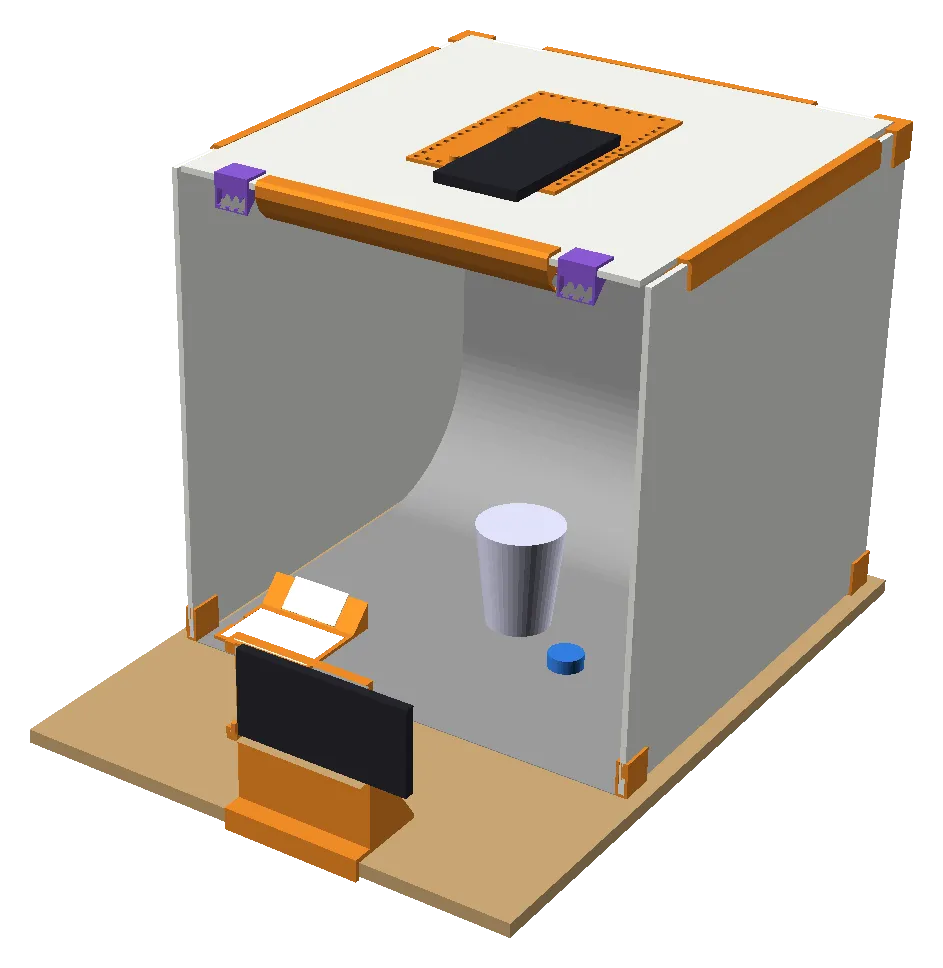
Foamboard walls, printed corner clips, an LED strip and a phone cradle. No glue, no screws: it packs flat and assembles without tools, which matters in a heritage building. Every object is photographed the same way, so the photos can later teach a small model to recognise what comes through the door.
People are never in frame. Donors get an anonymous reference, not a name in a database.
Three levels
- Beginner: assemble the flat-pack booth and photograph an object with the protocol.
- Maker: print the parts, cut the board, wire the lights, fit the cradle to your phone.
- Expert: change the parameters, the protocol and the gate rules; measure drift and data quality.
Where it stands
Designed on paper and in OpenSCAD (free 3D design software); parts rendered and checked. Before the first public session we must confirm, by phone, which licensed recycler takes each refused item and our battery tin. Until that’s done, we don’t take e-waste.
Les plans sont gratuits — the plans are free.