63 Rue Lavaud, Akaroa Aotearoa NZ

A small workshop that repairs, recycles and gives the plans away.

Bonjour, kia ora, welcome to Le Petit Atelier. We’re turning a cottage built around 1868, on Akaroa’s main street, into an open workshop. Inside: a repair café, a small recycling line, tools for the people who protect Banks Peninsula’s wildlife, and lessons for any age. Every design is published free.

We’re not open to the public yet, and the first repair café date is still to come. Here’s what we’re building, and how to join in.

The cottage at 63 Rue Lavaud: timber, a gable roof and an arched window.
c. 1868
63 Rue Lavaud

The house rules, all four

Four rules. Every project, no exceptions.

If a project breaks one of them, we don’t build it.

Read why we hold to them

  1. Rule 1: Every project repairs, reuses or protects something.

    If it doesn’t fix a thing, give a thing a second life, or look after the Peninsula, we don’t build it.

  2. Rule 2: Every design is published under an open licence.

    Plans, files and code are free to download, rebuild and improve. Nothing held back to protect a product.

  3. Rule 3: Recycled or reclaimed materials first.

    Dead printers, offcuts, bottles and boxes before anything new. We buy new only when salvage can’t do the job safely.

  4. Rule 4: No sponsor that conflicts with the mission.

    No closed, unrepairable or throwaway brands, and no claim we can’t check in the workshop ourselves. Every sponsor is named on screen.

Six tracks, three levels

Repair, recycle, protect, teach — and film all of it.

Six strands of work, one small workshop. Each project lands in one of them, and each comes at three levels — beginner, maker, expert — so the same work serves a nine-year-old and an engineer.

Levels

  1. B beginner
  2. M maker
  3. E expert
  • Recycling

    du déchet à la matière

    Bottles, boxes, print waste and dead electronics turned back into useful material.

  • Repair café

    réparé ici

    A free Saturday session, once a month, to fix broken things together — and print the parts nobody sells.

  • Conservation tech

    pour la presqu’île

    Cheap, tough electronics for the people protecting Banks Peninsula wildlife.

  • Teaching & kits

    pour tous les âges

    Every project at three levels, so the same work serves a nine-year-old and an engineer.

  • The workshop

    l’atelier

    Fitting out an 1868 cottage without putting a single screw in its walls.

  • The channel

    en direct de l’atelier

    Every build filmed from the first day, failures included.

Recycling, starting with one bottle

From a drink bottle to a spare part.

Plastic waste leaves the Peninsula on a truck. We want to turn some of it into material we can use here. We start small — a bottle machine, Le Nez the plastic identifier, sorting bins — and grow towards one modular line, the universal recycler.

How the recycling works

  1. Step 1: A bottle

    A clear drink bottle from a local café, washed, label and glue off.

    PET 1, wall ≈ 0.30 mm

  2. Step 2: A ribbon

    The MK6’s cutter peels the bottle into one long, even ribbon.

    strip 8 × 0.30 mm

  3. Step 3: A hot nozzle

    Pulled through a hot brass nozzle, the ribbon curls into a thin tube of filament.

    die drilled Ø 1.6 mm

  4. Step 4: A spool

    Wound onto a spool, then dried before it goes near a printer.

    ≈ 5–9 m per 1.5 L bottle

  5. Step 5: A spare part

    Printed into something that’s missing: a new knob for a repair-café toaster.

    print at 260 °C

The MK6 is still being built. These are the build-note numbers; the first spools will replace them with measured ones, good or bad.
Akaroa town, Rue Lavaud Street map of central Akaroa from the Main Wharf to the hill behind Rue Lavaud, with building outlines and 10 m contours. Le Petit Atelier is marked at 63 Rue Lavaud; Nomad Wholefoods is across the street at number 64. N Le Petit Atelier 63 Rue Lavaud

Town plan

Rue Lavaud, Akaroa

Across the street from the organic refill shop, about 800 m along the waterfront from the Main Wharf.

Workshop
Le Petit Atelier, 63 Rue Lavaud, Akaroa 7520
Position
43°48.26′S 172°58.07′E
Scale
200 m bar, contours 10 to 100 m

Elevation: LINZ / Environment Canterbury, CC BY 4.0. Streets and buildings © OpenStreetMap contributors. Dashed offshore lines are drawn, not soundings.

Heritage NZ List No. 5337, c.1868

Not a single screw in the walls.

The workshop is one tenancy in a timber-and-iron cottage built around 1868. It has been a church, a lawyer’s office, a house and visitor accommodation. It’s a Category 2 historic place, so nothing we add is fixed to it.

Every bench, shelf and panel stands on its own and can leave in a day, with the building left as we found it. Repair before replace, applied to a whole building.

The loud, hot machines — shredding, melting, pressing — run off site, in a garage. The cottage stays quiet.

The story of the place
Status, 28 Oct 2026

Early days, and we’ll say so.

Right now we’re finishing a machine that turns drink bottles into filament — the plastic thread a 3D printer melts to make things. Safety comes before any machine runs, and we’re sorting the electronics we already own.

Now

  1. Oct–Nov 2026 / Recycling

    Finish the bottle machine

    Print the last parts of the Recreator3D MK6, fit the hardware, run the safety checks, then pull the first filament from a clear bottle.

  2. Nov 2026 / The workshop

    Safety before machines

    Smoke alarms, extinguisher, fire blanket and an electrician’s check before any new machine is switched on.

  3. Nov 2026 / The workshop

    Know what we have

    Photograph and sort the electronics we already own into labelled bins, so we don’t buy what’s already in a drawer.

Next

  • The plastic identifier, Le Nez Dec 2026 – Jan 2027
  • First spool, first test log Dec 2026
  • Cardboard pulp for the shop across the street Dec 2026
  • The first episodes Dec 2026 – Jan 2027

Impact, counting starts now

The numbers start at zero. We’ll show them anyway.

Every kilo is weighed and every repair counted. Estimates are labelled as estimates. A quarter with poor numbers gets published unchanged — that’s the point.

How we count

0 kg (not measured yet)

Kept out of landfill

Our headline number. Counting starts with the first weighed bin. Only what is actually repaired or reprocessed counts.

Other impact counters, all at zero until counting starts
Measure Count so far When counting starts
Things repaired 0 items Counting starts at the first repair café.
Plastic made into filament 0 kg Counting starts with the first spool from bottles.
Devices harvested for parts 0 devices Counting starts once our battery and e-waste routes are confirmed.
Designs published free 0 designs The plans are being prepared for publication. This counts up when they go online.
People taught 0 people Counting starts with the first session.
Traps instrumented 0 traps Not before the trappers ask for it.

On the bench

What we’re building.

Twenty projects, from a row of sorting bins to a wildlife camera. Each one has an honest status.

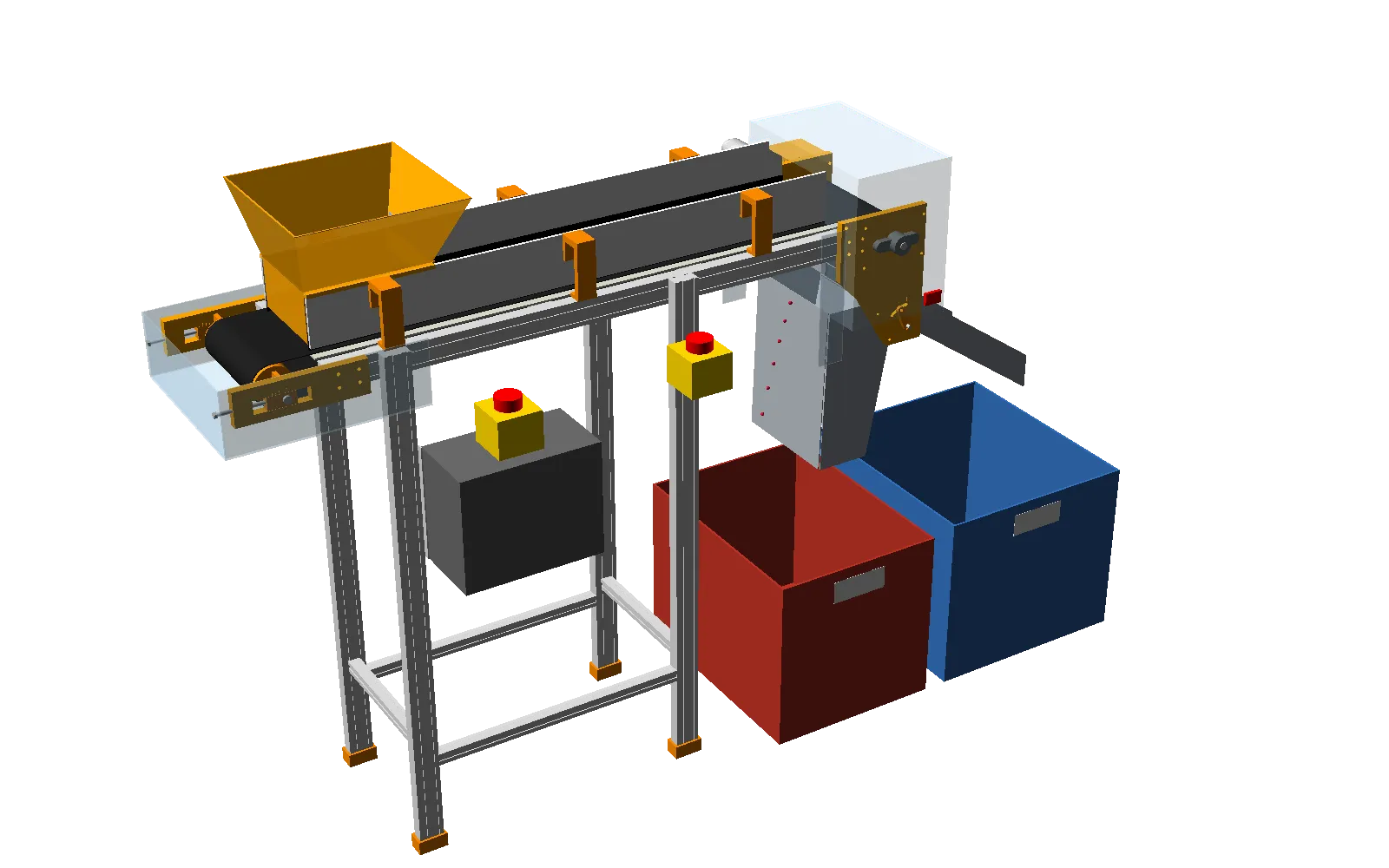
CAD render of a short conveyor belt on an aluminium frame, with a feed hopper, a magnetic head pulley, two collection bins and red emergency-stop buttons. LPA-0010

Recycling

The universal recycler

One modular line for household waste and e-waste: identify it, take it apart, sort it by physics into clean streams, then make something new.

Status: designing
  • beginner
  • maker
  • expert

Architecture and most modules drawn. Nothing built yet beyond the first machines.

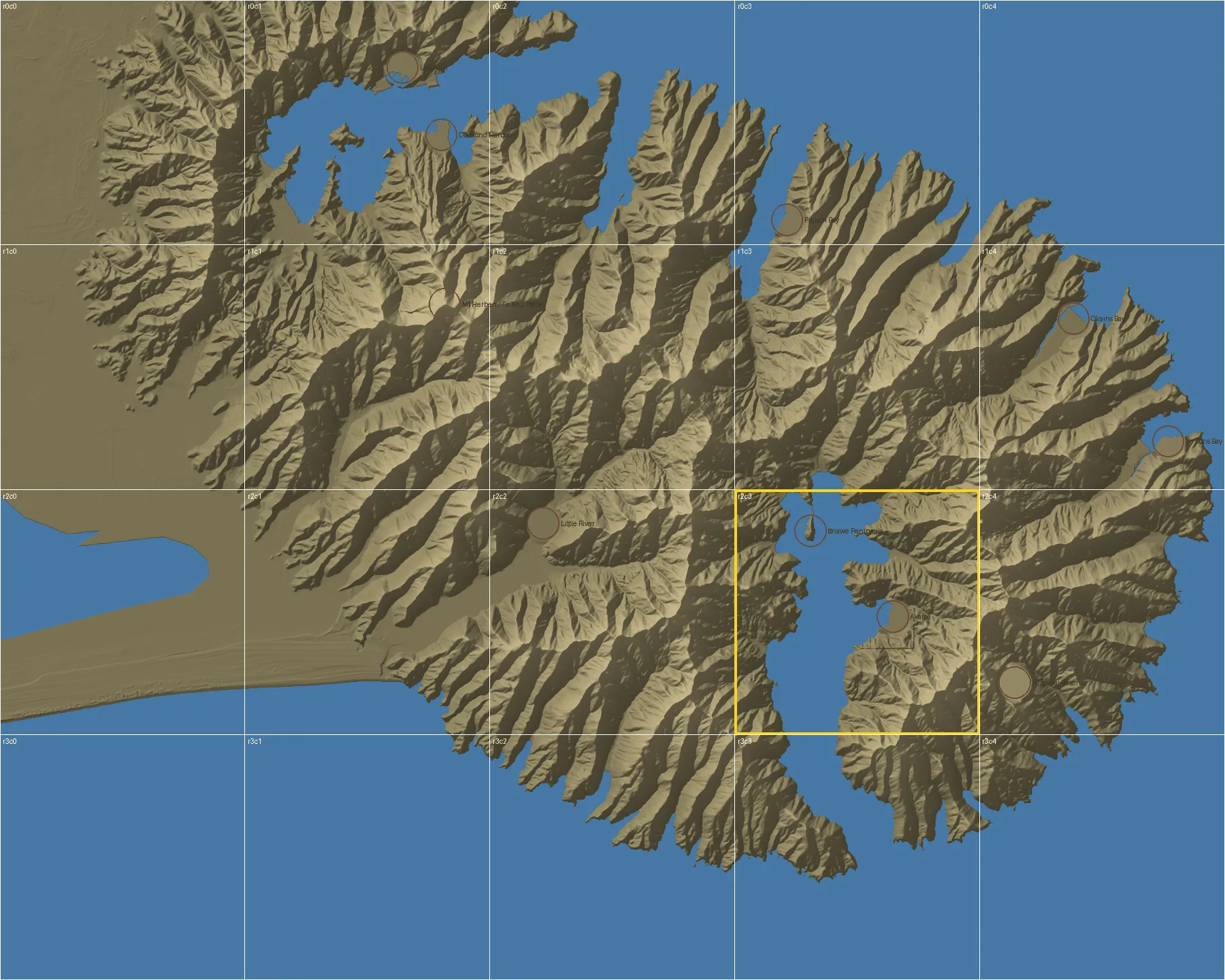
Shaded relief map of Banks Peninsula seen from above, sea in blue, ridges in sand tones, divided into a grid of 20 tiles with the Akaroa Harbour tile outlined in yellow. LPA-0095

Teaching & kits

Akaroa relief maps

Two touchable 3D maps — all of Banks Peninsula and the Akaroa town centre — printed as tiles from open elevation data.

Status: building
  • beginner
  • maker
  • expert

The map-making pipeline works and two test tiles are ready to print. Nothing printed yet.

LPA-0005

Repair café

Repair café — building the kit

A free monthly morning where neighbours bring broken things and fix them together. When a plastic part is missing, we measure it, model it and print it.

Status: designing
  • beginner
  • maker
  • expert

Planning. The first date is not set yet; it will be announced on the mailing list.

LPA-0020

Recycling

Bottle to filament — Recreator3D MK6

A small machine that cuts a drink bottle into a ribbon and pulls it through a hot nozzle to make 3D-printer filament. Built from an old printer.

Status: building
  • beginner
  • maker
  • expert

Print pack ready, donor printer inventoried. Hardware still to buy; no filament made yet.

Six ways in

Bring something. Suggest something. Join in.

Get involved

The list: one email a month.

What was built, repaired and published, the first repair café date and the honest numbers. No spam, no tracking.