Recycling, our first focus
Waste that leaves the Peninsula, made useful here instead.
Recycling comes first here, for a practical reason. When the plastic for a test print comes from a bottle, and a motor comes from a dead printer instead of a six-week order, you can afford to try things and fail.
It also makes the best videos: you can watch a bottle become a spool.
What we claim, and what we don’t
We’re honest about the limits. Recycling locally uses power and time, and the result is usually weaker than new material. Our claim is smaller, and true: waste that would leave on a truck becomes useful material here, and anyone can see what recycling really takes.
The master design
One line, many modules.
Instead of one machine per material, we’re designing one line made of modules. Put an object in. It’s identified, checked for hazards, taken apart, shredded coarsely, then sorted by physics into clean streams.
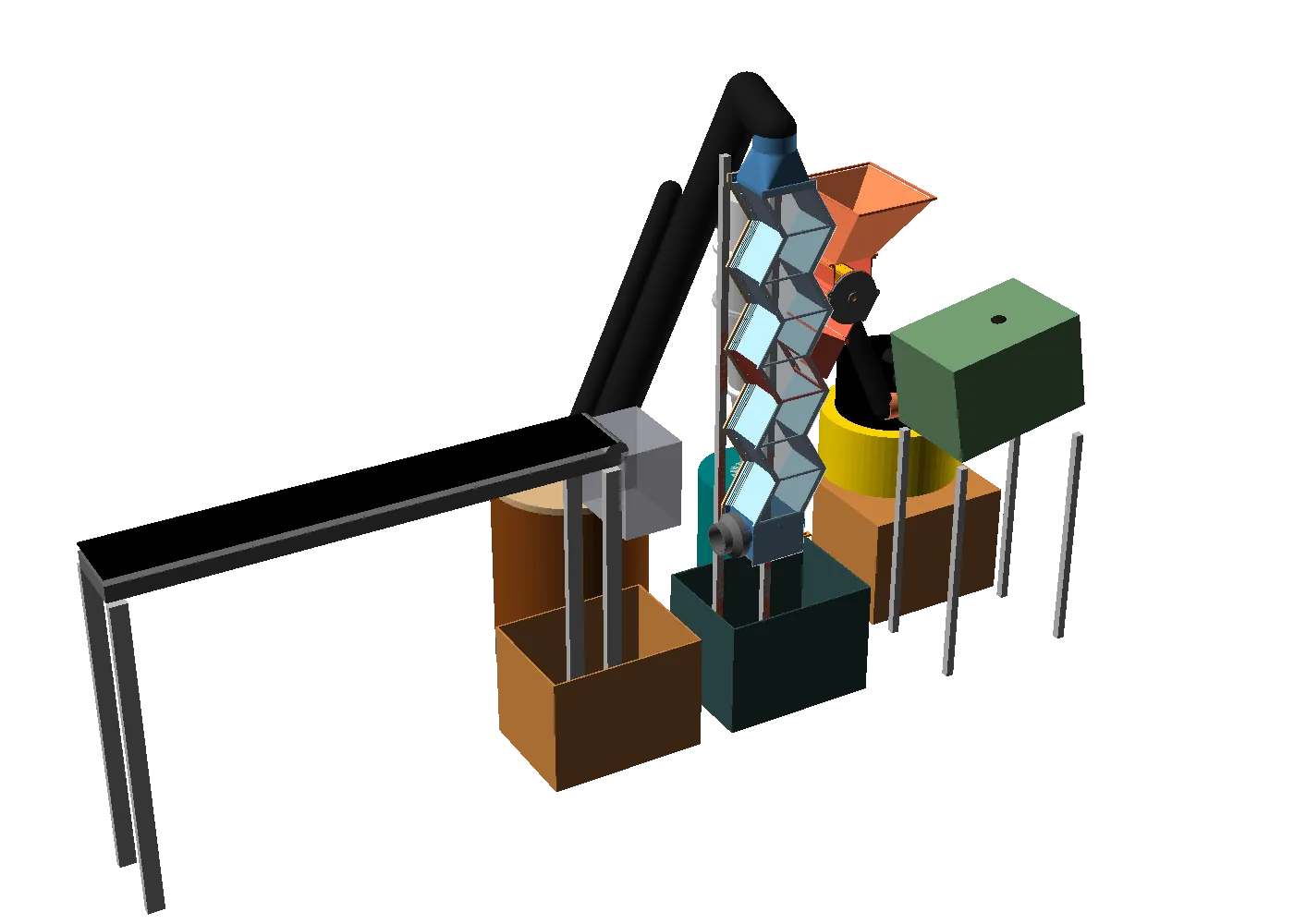
Every item gets a record, so the numbers can be published, not claimed.
- Where it stands
- Architecture and most modules designed.
- Phase A, to December 2026
- Simple manual tools: intake, magnets, weighed bins.
- Through 2027
- The conveyor and the sorters.
LPA-UR The universal recycler, one object at a time
- Phase A
- Oct–Dec 2026, by hand
- Phase B
- Jan–Jun 2027, the conveyor line
- Phase C
- from Jul 2027, purity and learning
-
Take it in
Everything starts at the door, and nothing gets shredded until we know what it is.
- In
What comes in
- Household plastic
- E-waste
- Bottles
- Cardboard
Household plastic, old electronics, drink bottles and cardboard.
- M0
Intake
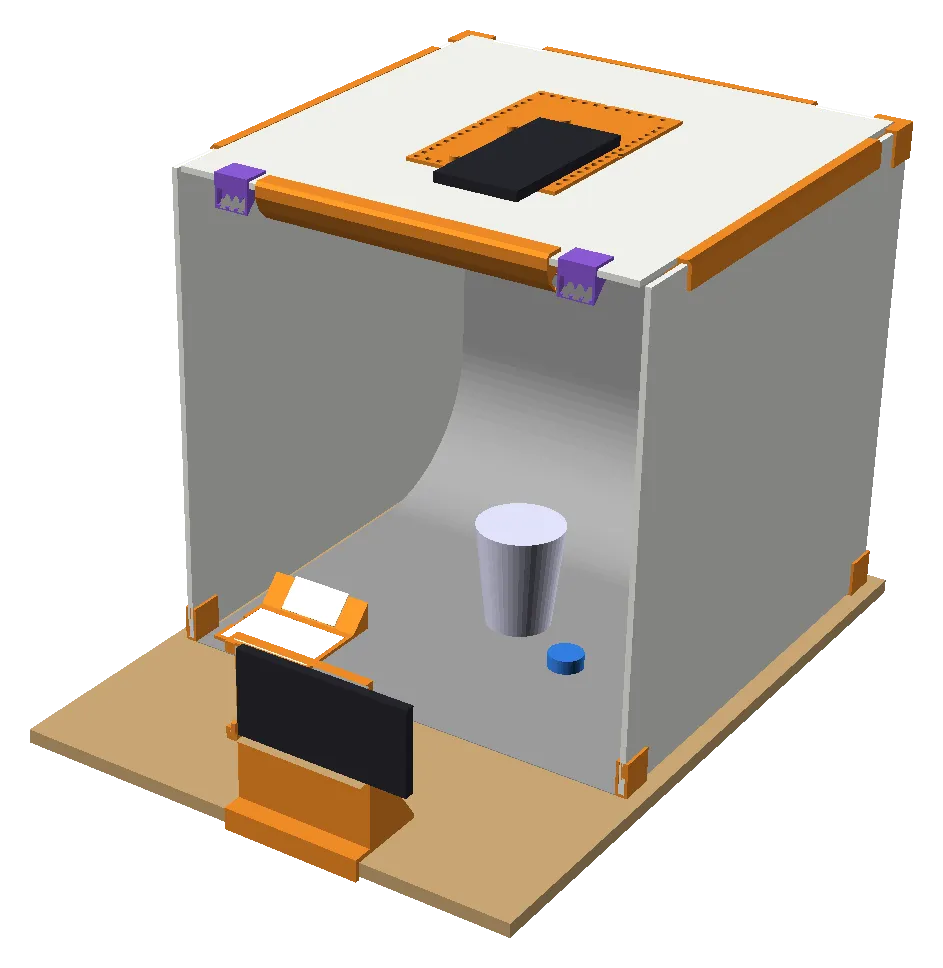
Batteries out at the door. Then a photo, a weight and a label, so every item has a record.
Phase A now
How it works
Two hazard gates: the doorway (batteries, lamps, gas cans) and the bench. We name the product first; the Le Nez infrared scanner only checks what the guess can’t settle. Each item gets an ID like I-000123 with a QR code.
- M0b
Repair first, then take apart
If it can be fixed, it goes to the repair café. If not, we take it apart by hand and keep the good parts.
Phase A now
How it works
A teardown bench with a written recipe per product family. Motors, magnets, screws and boards are harvested before anything is shredded. Robot-assisted disassembly is a research track for Phase C.
- M1
Shredder
Cuts rigid plastic into 20–40 mm pieces: the right size for the sorters, not the smallest.
Phase B 2027
How it works
Over-shredding wastes energy, makes dust and microplastics, and can make separation impossible. Our own shredder is paused until 2027; print waste goes through a small crusher for now.
- In
-
Sort it by physics
Seven stages, each using one property of the material: magnetism, conductivity, weight, size, density, charge and colour.
- M2
Magnet
A strong magnet pulls out anything made of steel.
Pulls out: steel
Phase A now
How it works
By hand for now: a neodymium bar in a sleeve, and a rake. In 2027 the conveyor’s head pulley becomes the magnet. Steel has to be out before the eddy-current rotor and the extruder.
- M3
Eddy current
A spinning magnet rotor kicks aluminium and copper off the belt.
Pulls out: aluminium, copper
Phase B 2027
How it works
64 neodymium magnets at 3,000 rpm induce currents in non-ferrous metal; its own field throws it forward while plastic just drops. The most dangerous module: it only spins behind a closed hood.
- M4
Air classifier
Air rises through a zig-zag tube. Paper, film and foam fly up; hard plastic falls.
Pulls out: paper, film, foam
Phase B 2027
How it works
Lights (terminal velocity under ≈ 1.7 m/s) rise, heavies (over ≈ 2.8 m/s) fall. The paper goes on to moulded pulp. Dust ends in a printed cyclone and an H13 filter.
- M5
Screening
Shaking sieves sort the pieces by size.
Pulls out: too big, too fine
Phase B 2027
How it works
Printed decks of 40, 8 and 1.5 mm, shaken at about 20 Hz. Oversize goes back for a second shred; fines under 1.5 mm are microplastic and go into a sealed tub. Hand sieves until then.
- M7
Sink or float
In water, PP and PE float and the rest sinks. Salt water splits the next group.
Pulls out: PP + PE, PS + ABS
Phase A now
How it works
Water (1.00) floats PP and PE; brine (1.10) floats PS and ABS. PET and PVC can’t be split by density, so every sinker waits for a scanner check. By hand in tubs now, a tank and auger in 2027.
- M8
Electrostatic
Tumbled flakes pick up a charge, and high-voltage plates pull PVC away from PET.
Pulls out: PVC
Phase C late 2027
How it works
Tribo-charging: two plastics rubbed together charge with opposite signs. Plates at ±15 kV, current-limited and interlocked. PVC is separated cold and never heated here.
- M9
Optical sorter
A sensor reads each flake by its light, and a puff of air knocks it into the right bin.
Pulls out: by plastic and colour
Phase C late 2027
How it works
Near-infrared plus colour, 10–15 flakes a second in one lane (≈ 1.2–1.8 kg/h). Out come single-plastic, single-colour lots: clear PET, natural HDPE, caps by colour.
Some things can’t be pulled apart by any machine (multilayer cartons, glued composites). They’re weighed as residue, not hidden.
- M2
-
Make something
Clean, sorted material is easy to work with. That’s the point of all the sorting.
- M10
Dry and weigh
Flakes are dried and every stream is weighed, so we know exactly what came out.
Phase A now
How it works
A shared food dehydrator. Mass balance per batch, purity samples and energy in Wh per kg: published numbers, not slogans.
- MK6 4b
Filament
Bottles and clean flakes become 3D-printer filament.
Phase A now
How it works
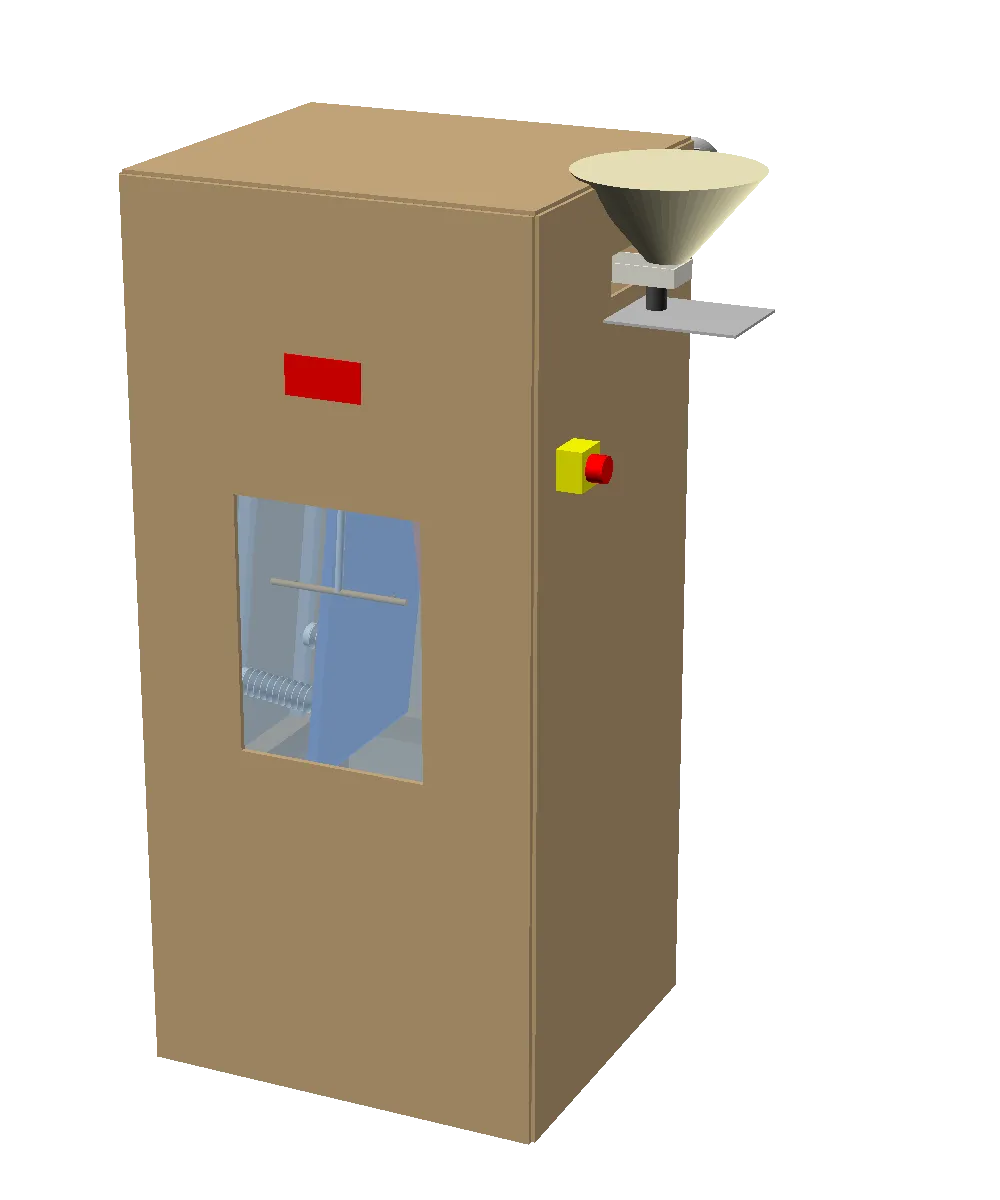
Bottles go through the Recreator3D MK6 (bottle, ribbon, filament). Clean flakes go through a small filament extruder that arrives in November.
- 4a
Sheets
Flakes pressed into flat sheets for furniture, signs and parts.
Phase A now
How it works
Planned for Phase A and the first thing to slip if time runs short. Natural HDPE from the optical sorter makes the cleanest sheets.
- 1b
Moulded pulp
Cardboard and paper become trays and packaging.
Phase A now
How it works
The moulds are printed from our own bottle filament, so pulp starts once the MK6 makes its first spool.
- 4c
Moulded parts
Melted flakes pushed into a mould: knobs, clips, small spare parts.
Planned later
How it works
A small injection machine, planned. Only PP, PE, PET and PLA are ever melted here; PS and ABS are sorted cold, never heated.
- Out
Back to Akaroa
Spare parts for the repair café, kits for schools, useful things for the town. And the plans, free.
Steel, circuit boards and PVC go to licensed recyclers. Nothing hazardous is melted here.
- M10
Every gram counted
Each item gets an ID, a photo and a weight on the way in; every stream is weighed on the way out. The record starts with the first item.
Phase Anow
How it works
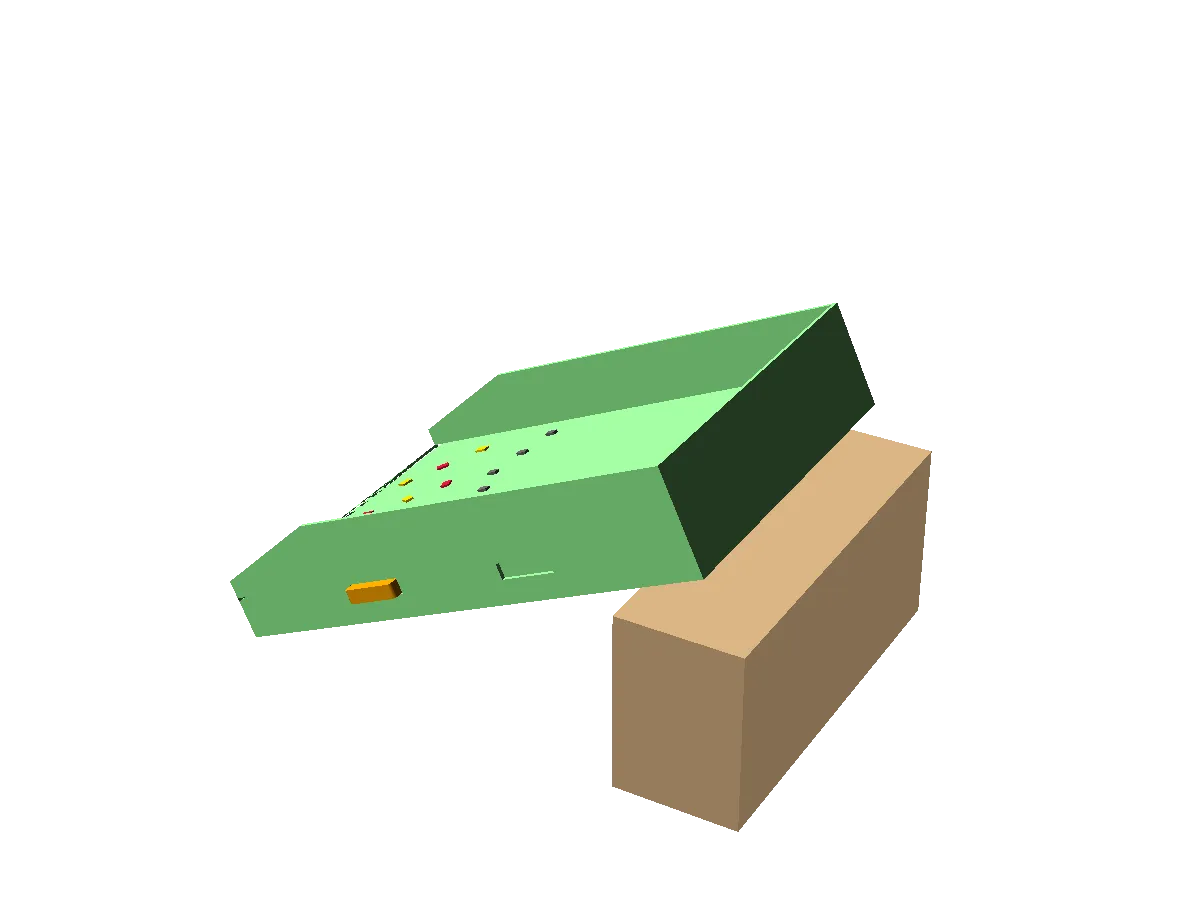
A local database that works offline. Later the hub learns from every item and shares what it learns with other workshops, peer to peer, with no central server.
Bottle, spool, mould, box
A bottle becomes a spool. The spool becomes a mould.
A clear drink bottle is cut into one long ribbon, pulled through a hot nozzle and wound onto a spool as filament — the plastic thread a 3D printer melts. The machine is the Recreator3D MK6, built from a dead 3D printer. That filament then prints the mould for cardboard pulp: jar cradles for the organic refill shop across the street, made from its own delivery boxes.
5–9 m
of filament from a 1.5 L bottle — our physics estimate. We’ll weigh and measure the real thing and publish it.
Status: building no spool yet-
Step 1: A bottle
A clear drink bottle from a local café, washed, label and glue off.
PET 1, wall ≈ 0.30 mm
then, cut
-
Step 2: A ribbon
The MK6’s cutter peels the bottle into one long, even ribbon.
strip 8 × 0.30 mm
then, 210–220 °C
-
Step 3: A hot nozzle
Pulled through a hot brass nozzle, the ribbon curls into a thin tube of filament.
die drilled Ø 1.6 mm
then, 900 mm/min
-
Step 4: A spool
Wound onto a spool, then dried before it goes near a printer.
≈ 5–9 m per 1.5 L bottle
then, dry 4–6 h, 65–75 °C
-
Step 5: A spare part
Printed into something that’s missing: a new knob for a repair-café toaster.
print at 260 °C
Resin codes 1 to 7
Which plastics we can use, and which we never heat.
How we tell them apart: the resin code first, then a float test in water, then Le Nez, our plastic identifier.
Read the triangle on the bottom of the item. No triangle, no number: it goes in the unknown pile.
Le Nez, our plastic identifier| Code | Plastic | Here? | Why |
|---|---|---|---|
| Code 1 | PET drink bottles | Yes | Bottle to filament |
| Code 2 | HDPE milk bottles, caps | Yes, pressed into sheets | Poor filament, great sheets |
| Code 3 | PVC | Never | Gives off hydrogen chloride when heated |
| Code 4 | LDPE film, bags | Limited | Hard to use well |
| Code 5 | PP caps, tubs | Yes, pressed into sheets | Tough, flexible |
| Code 6 | PS trays, foam | Sorted cold only | Fumes when hot; never melted here |
| Code 7 | PLA / PETG print waste | Yes | Re-melted into filament |
| Code 7 | ABS | Sorted cold only | Fumes when hot; never melted here |
| No code | Unknown | No | If we can’t identify it, we don’t heat it |
Intake, not open yet
What you’ll be able to bring.
Intake isn’t open yet.
Until our battery and e-waste routes are confirmed with licensed recyclers, we can’t take electronics. Tell us what you have and we’ll reply when we can take it.
Tell us what you have-
Small broken appliances and electronics
Toasters, lamps, radios, routers, keyboards, toys with motors. Batteries out first.
-
Printers and 3D printers
Inkjet, laser and dead 3D printers are full of motors, rails and screws.
-
Computers and laptops
Remove or wipe your data first. Anything left is physically destroyed, never looked at.
-
Cables, chargers and power supplies
Untested supplies are treated as a safety item, never used as found.
-
E-bikes and scooters, without their batteries
Hub motors, controllers and brakes are welcome. The battery stays with you.
-
Clean PET drink bottles
Rinsed, caps off, labels on is fine. Clear bottles are best.
-
Bottle caps and HDPE / PP containers
Milk bottles, caps, tubs (codes 2 and 5). Rinsed. Sorted by type if you can.
-
Failed 3D prints, supports and purge
PLA and PETG (the two everyday printing plastics), kept separate and labelled.
-
Plain brown cardboard
Not glossy, waxed or plastic-lined.
-
Plywood and timber offcuts
Untreated, at least 150 mm. Pallets only if stamped HT (heat-treated).
Refused, and why
What we can’t take — and where it should go instead.
Batteries out at the door.
Batteries are removed in the doorway, before an item comes inside, and go straight into a sand-filled steel tin outside. They leave the site the same day, to a licensed recycler. They’re never stored, charged, tested or opened in the building.
A damaged lithium cell in a timber building from 1868 is the worst thing that could happen here.
Refused: lithium batteries of any size, or devices whose battery can’t come out without force.
-
CRT televisions and monitors
Lead glass and high voltage.
-
Fluorescent tubes, CFLs and mercury lamps
They contain mercury.
-
Fridges, freezers, heat pumps, dehumidifiers, air-conditioners
Refrigerant gases harm the ozone layer and need specialist handling.
-
Microwave ovens
A high-voltage capacitor and a magnetron. Dangerous to open.
-
Smoke detectors
Some contain a small radioactive source.
-
Gas canisters, aerosol cans, fire extinguishers
Pressurised: they can burst.
-
Anything damp, corroded, leaking or mouldy
Unsafe to handle and to open.
-
Old heaters, irons or hair dryers that may contain asbestos
Asbestos fibres are a serious health risk.
-
PVC (resin code 3) and plastics nobody can identify
PVC gives off hydrogen chloride when heated. We never heat what we can’t identify.
-
Containers with oil, solvent, paint or pesticide residue
Chemical hazard.
-
Treated timber and pallets stamped MB
Treated with chemicals; we never cut them indoors or burn them.
For refused items: Christchurch City Council’s EcoDrop centres take household e-waste and batteries — check their current list and hours before you go. We’ll keep the nearest options on this page.
Ask about a specific itemQuiet here, loud elsewhere
The cottage stays quiet.
63 Rue Lavaud, Akaroa
In the workshop
Sorting, the bottle machine and Le Nez. Quiet, ventilated, attended.
Off site, in a garage
Loud, hot, wet or dusty
Shredding, pressing, extruding, pulp. With its own safety kit.
No machine runs anywhere before an electrician has checked it.
Every kilo weighed. Every watt-hour counted.
We log what goes in, what comes out, how clean it is and how much electricity it took. If a step burns more energy than it saves, it isn’t ecological, and we’ll say so. Diameter spread, failure rates and the first ten bad batches will all be published.
The impact counters- kgin and out, per stream
- Wh/kgelectricity per kilo made
- %purity of each stream
12 projects
The recycling projects.
- LPA-0010 The universal recycler Status: designing
Next Phase A: the intake station, the magnet tools and the first weighed bins.
- LPA-0012 Sorting bins Status: idea
Next Set out the bins, print the labels, log the first weekly weights.
- LPA-0015 M0 — the intake station Status: designing
Next Confirm where each refused item goes (batteries, lamps, CRTs, fridges) before the first public drop-off.
- LPA-0016 M2 — magnetic separator Status: designing
Next Test how well the magnets pull steel through 2–3 mm of printed plastic.
- LPA-0017 M4 — zig-zag air classifier Status: designing
Next Find out whether a salvaged shop-vac can reach 4 m/s through the column.
- LPA-0018 M8 — electrostatic separator Status: designing
Next Measure the garage's humidity through a winter: the charging only works in dry air (40 % RH or less).
- LPA-0020 Bottle to filament — Recreator3D MK6 Status: building
Next Finish the printed parts, fit the hardware, then the first pull from a clear bottle.
- LPA-0030 Le Nez — plastic identifier Status: designing
Next Order the circuit boards and infrared parts, then build a labelled reference set from local waste.
- LPA-0040 Cardboard pulp for the refill shop Status: designing
Next First test sheet of seed paper, then measure the jars and design the jar-cradle mould.
- LPA-0050 Filament from print waste Status: building
Next Set it up in the garage with dry PLA regrind, then log diameter, weight and energy for every batch.
- LPA-0060 Hand-cranked shredder Status: parked
Next Decide in 2027 whether household HDPE, PP and PET need it.
- LPA-0070 Sheet press for bottle caps Status: idea
Next Keep collecting caps, sorted by colour and type, until the press arrives.
Start here
Start a jar of bottle caps.
Sorted stock is what makes a machine useful on day one. Keep your bottle caps, sorted by colour if you’re keen, and bring them when intake opens.
Les plans sont gratuits — the plans are free.