What it is
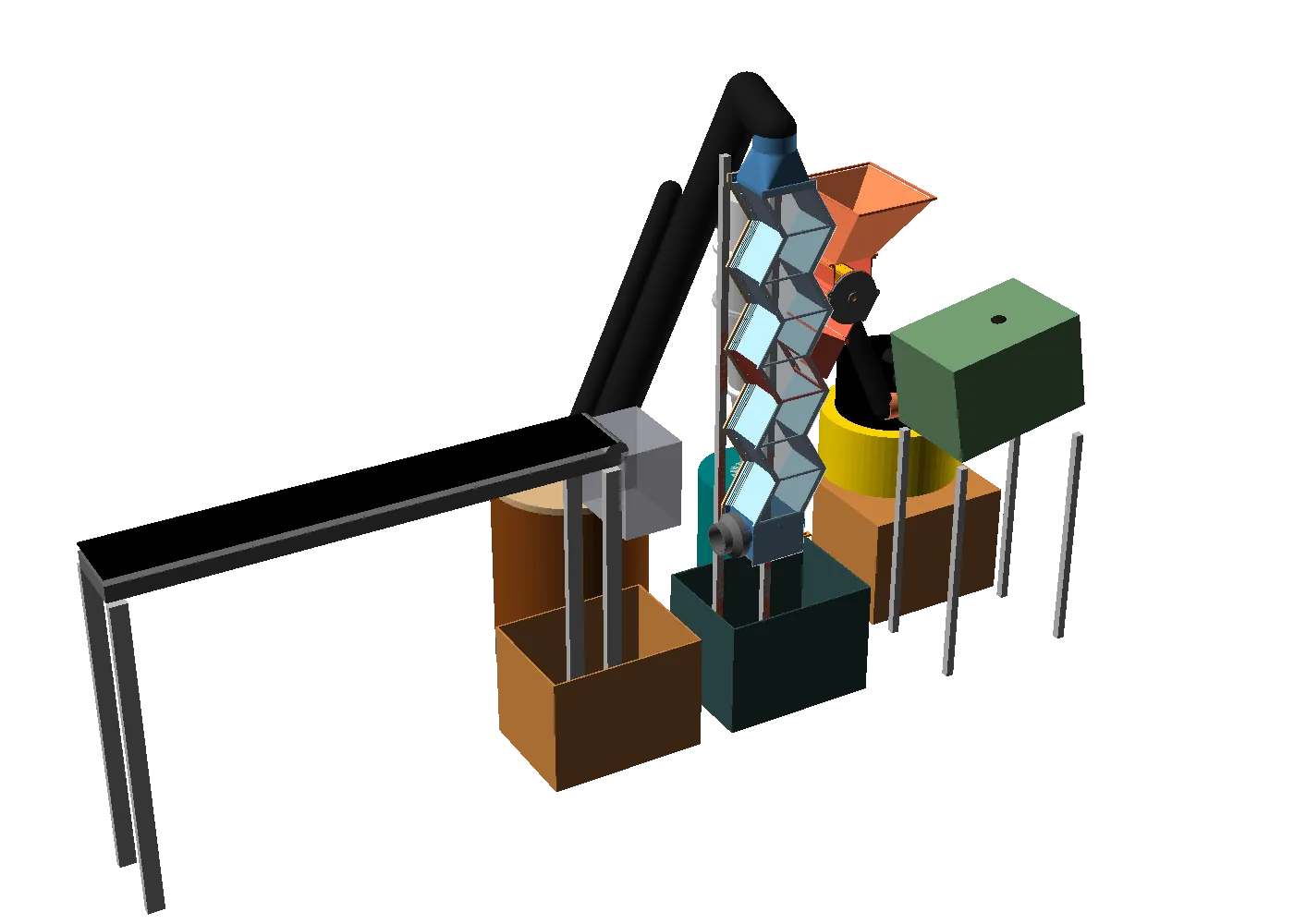
PET (drink bottles) and PVC (pipes, some packaging) have almost the same density, so water tanks can’t split them. But they charge differently when rubbed. Tumble mixed flakes in a spinning polypropylene tube and PET comes out slightly positive, PVC slightly negative — the balloon-on-a-jumper effect.
Let the charged flakes fall between two plates held at high voltage, and they drift apart: PET towards one side, PVC towards the other. Splitters at the bottom collect them separately.
Why it matters
Without it, every “sinker” from the water tanks sits in quarantine, because it might contain PVC. With it, more PET can be recycled instead of landfilled, and the PVC goes to a licensed recycler — cold, never melted here.
It is a purification step only. On its own it never clears a batch for heating. The plastic identifier and a halogen check still have the last word.
Safety
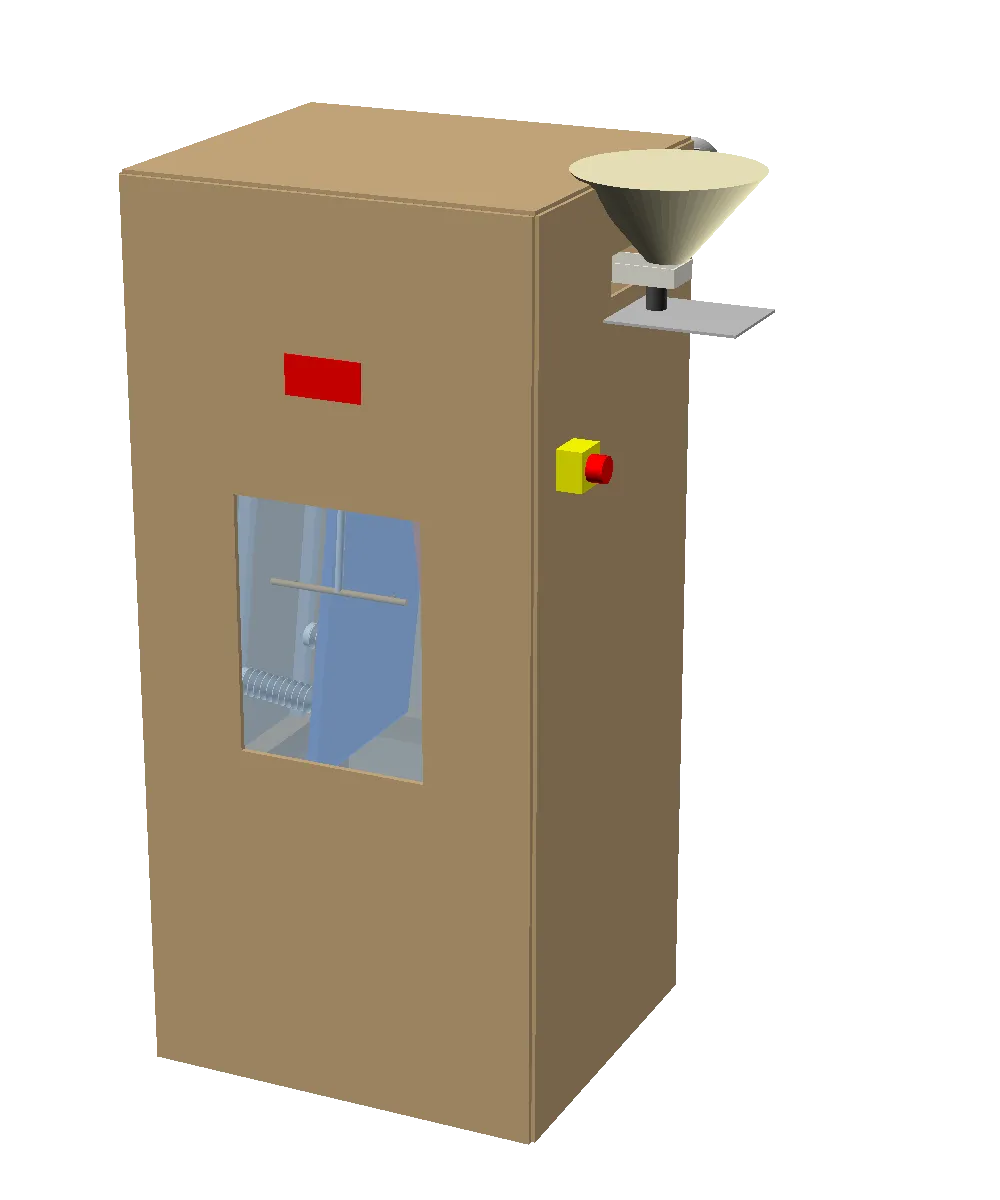
High voltage (±15 kV), current-limited. An earthed, interlocked cabinet; an earthing arm that drops onto the plates when the door opens; its own extraction vented outside; a key switch. Electrician check before first power-on. Children never near it.
Where it stands
A design for Phase C of the universal recycler, from July 2027. The model looks promising; the real numbers come from tests, and we’ll publish them either way.
Les plans sont gratuits — the plans are free.