What it is
Most small recycling projects build one machine per material: a bottle machine here, a shredder there. The universal recycler is a different idea. One line, many modules. You put an object in. The line works out what it is, checks it for hazards, takes it apart into the smallest useful pieces, and sorts those pieces into clean streams of single materials.
Clean, sorted material is the real prize. Mixed plastics cannot be recycled together. Sorted plastic can become filament, sheets or moulded parts; sorted steel and aluminium can go to scrap at a fair value.
How it works, in plain words
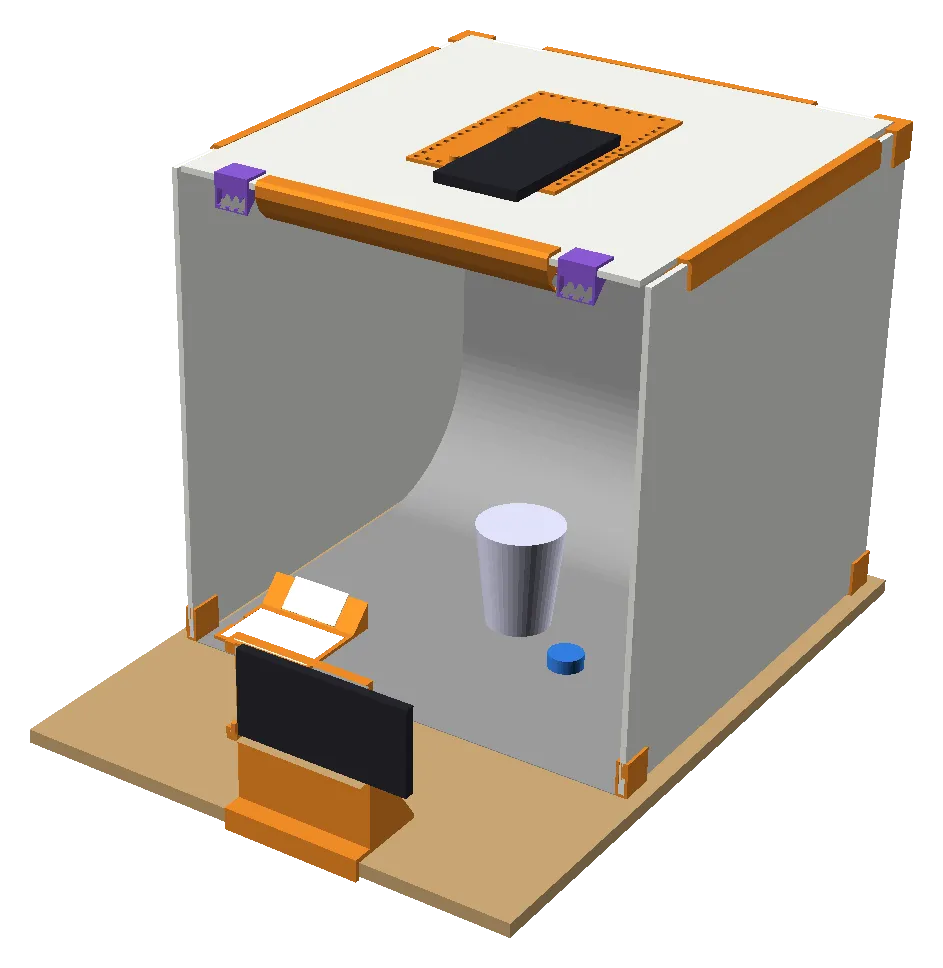
- Intake (M0). A photo, a weight, a few questions. Batteries come out at the door. Anything dangerous is refused.
- Take it apart (M0b). Electronics are opened by hand, repair first. Useful parts are kept.
- Shred, coarsely. Into pieces 20–40 mm across.
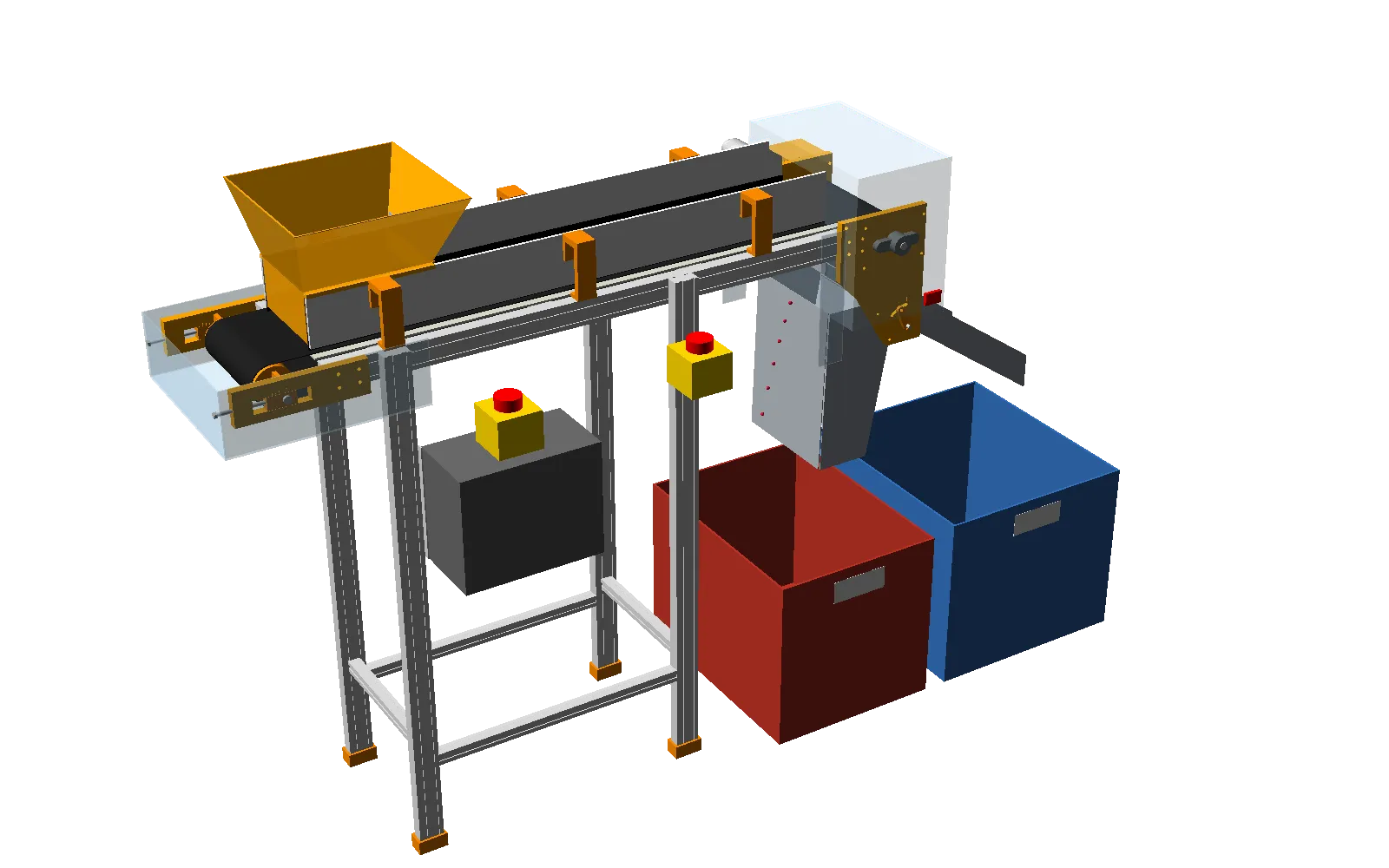
- Sort by physics. A magnet pulls out steel (M2). A fast-spinning magnet rotor flicks out aluminium (M3, an eddy-current separator: the spinning field pushes on any metal that conducts, even if it isn’t magnetic). A column of air lifts paper and film away from rigid plastic (M4). Screens sort by size, water tanks by density, and later an electrostatic separator (M8) and an optical sorter (M9) split plastics that look alike.
- Make. Filament, sheets, moulded pulp.
Every item gets a record from the first day, so the line learns and the numbers can be published.
Where it stands
The architecture is written and most modules have a full design with renders. Nothing of the line itself is built. Phase A (to December 2026) is deliberately small: the intake station, a magnet bar, tubs and the database. Phase B (January–June 2027) adds the conveyor, the magnet roller, the eddy-current rotor, the air classifier, screens and water tanks. Phase C (from July 2027) adds the electrostatic and optical sorters.
The loud and hot parts never run in our 1868 building. They run off site, in a garage.
Honest limits
Some things can’t be separated mechanically: multilayer cartons, glued composites. They are a declared residue stream, not hidden. And we do not heat PVC, ever.
Les plans sont gratuits — the plans are free.